


The Rise of Intentional Insights in Modern Conversion Optimization
The Shift from Surface Metrics to Deep Intent
For the better part of a decade, conversion rate optimization (CRO) was treated as a game of inches. Marketers obsessed over button colors, font sizes, and the placement of hero images. While these incremental changes provided marginal gains, they often lacked a cohesive narrative. In the current digital landscape, where consumer skepticism is at an all-time high and attention spans are at an all-time low, the industry is witnessing a significant pivot. We are moving away from reactive testing toward a philosophy of intentional insights.
Intentional insights represent a departure from the 'spray and pray' method of data collection. Instead of gathering every possible data point and hoping a pattern emerges, modern brands are now using AI and advanced analytics to identify the specific psychological drivers behind consumer behavior. This shift is not merely about increasing a percentage; it is about understanding the 'why' behind the 'what' to foster sustainable, smarter growth.
The Evolution of the Conversion Funnel
The traditional conversion funnel, once viewed as a linear path from awareness to purchase, has become increasingly fragmented. Today’s consumer journey is a complex web of touchpoints, influenced by social proof, brand values, and instantaneous access to competitors. In this environment, generic optimization strategies often fall flat because they treat every visitor as a monolith.
Observational trends in 2025 suggest that the brands winning the conversion race are those that treat their data as a living dialogue. They are no longer looking at bounce rates in isolation. Instead, they are analyzing how intent shifts as a user moves from a discovery phase on social media to a research phase on a landing page. This nuanced approach allows brands to deliver the right message at the exact moment of decision-making, transforming a passive browser into an intentional buyer.
The Role of AI in Uncovering Hidden Patterns
Artificial Intelligence has been the primary catalyst for this transition. While human analysts can spot obvious trends, AI-driven platforms like Get Heartbeat excel at identifying the subtle correlations that define modern brand growth. By processing vast amounts of behavioral data in real-time, AI can pinpoint where a brand’s narrative is failing to resonate with its target audience.
Intentional insights leverage AI to move beyond descriptive analytics—telling us what happened—to prescriptive and predictive analytics. This means brands can now anticipate friction points before they result in a lost sale. Whether it is a misalignment between ad copy and product descriptions or a checkout process that feels too clinical, AI provides the clarity needed to make high-impact adjustments with surgical precision.
Defining the Intent-First Framework
To successfully integrate intentional insights into a growth strategy, organizations must move beyond the silos of marketing and product development. It requires an integrated framework that prioritizes the user’s psychological state. This framework typically involves several key pillars:
- Contextual Relevance: Ensuring the content aligns with the user’s source of origin and current stage in the buying cycle.
- Psychological Trigger Mapping: Identifying whether a user is motivated by logic, urgency, social belonging, or fear of missing out.
- Friction Reduction: Using data to remove cognitive load, making the path to conversion as intuitive as possible.
- Continuous Feedback Loops: Implementing systems where customer sentiment and behavioral data constantly inform brand messaging.
Bridging the Gap Between Behavior and Action
One of the most profound shifts in conversion optimization is the focus on qualitative depth. In the past, quantitative data—the hard numbers—was king. Today, the industry recognizes that numbers without context are often misleading. A high time-on-page metric could signify deep engagement, or it could signify a user who is frustrated and unable to find the information they need.
Intentional insights bridge this gap by layering behavioral patterns over quantitative metrics. By analyzing heatmaps, session recordings, and AI-driven sentiment analysis, brands can discern the emotional state of their audience. This allows for a more empathetic approach to optimization. When a brand understands that a user is hesitant because of a lack of trust, the solution isn't a larger 'Buy Now' button; it is the strategic placement of a testimonial or a more transparent return policy.
Moving Toward Smarter, Sustainable Growth
The rise of intentional insights signals the end of the 'growth at all costs' era. Brands are realizing that high conversion rates are meaningless if they lead to high churn or a diluted brand identity. Smarter growth is about attracting the right customers—those whose intent aligns with the brand’s core value proposition.
As we look toward the future of conversion optimization, the focus will continue to shift toward personalization at scale. However, this is not the creepy, invasive personalization of the past. It is a sophisticated, intent-based personalization that respects user privacy while providing a seamless, value-driven experience. By harnessing the power of AI to gain deeper brand insights, companies are finally able to speak to their customers as individuals, rather than data points.
Conclusion: The Future is Intentional
The transition to intentional insights is more than a trend; it is a fundamental shift in how brands interact with the digital world. In an era defined by noise, clarity is the ultimate competitive advantage. By moving beyond surface-level A/B testing and embracing a deeper understanding of consumer intent, brands can build more resilient, high-converting experiences that stand the test of time.
Ultimately, conversion optimization is no longer just about changing the interface; it is about changing the relationship between the brand and the consumer. Those who master the art of intentional insights will not only see better numbers—they will build stronger, more meaningful brands in the process.


The Quiet Shift Toward Strategic Clarity in Brand Decision Making
The Quiet Evolution of Brand Wisdom
In the relentless hum of the digital age, we have become accustomed to the noise. For years, the prevailing wisdom in brand growth was centered on volume: more data, more touchpoints, more content, and more speed. We believed that if we could simply capture every byte of consumer behavior, the path forward would illuminate itself. Yet, as we stand in 2025, a quiet shift is occurring. The most successful brands are no longer those with the loudest voices or the largest datasets; they are the ones who have found the courage to seek strategic clarity.
Cultivating this strategic lens requires a grounded perspective on evolving audience behavior, allowing leaders to distinguish between fleeting digital trends and meaningful human connections.
This shift isn't a loud revolution. It is a subtle, introspective movement away from reactive tactics toward intentional decision-making. It is the realization that in an era of infinite information, the most valuable asset a brand can possess is a clear view of its own 'heartbeat'—the core essence of why it exists and how it truly resonates with its audience.
Beyond the Noise: Why More Isn’t Always Better
For too long, brand leaders have been drowning in dashboards. We have metrics for every click, every scroll, and every momentary lapse in attention. But data without a narrative is merely noise. The 'Quiet Shift' represents a collective exhaling—a moment where we stop asking 'What else can we track?' and start asking 'What does this actually mean for our human connection?'
The Illusion of Action
There is a comforting safety in busywork. Running another A/B test or launching a new social campaign feels like progress. However, when we strip away the frantic activity, we often find a lack of direction. Strategic clarity is the antidote to this 'illusion of action.' It requires us to pause and evaluate whether our decisions are being driven by genuine insight or merely by the fear of standing still. When we prioritize clarity, we realize that one well-timed, deeply resonant move is worth a thousand fragmented efforts.
The Anatomy of Strategic Clarity
What does it mean to have clarity in a market that is constantly shifting? It isn't about having a static five-year plan. Instead, it is about developing a refined lens through which every opportunity is filtered. This clarity is built on three fundamental pillars:
- Intentionality: Every brand action must serve a specific purpose that aligns with long-term resonance rather than short-term spikes.
- Alignment: Ensuring that internal data, AI insights, and human intuition are all speaking the same language.
- Simplification: The ability to discard the 'good' opportunities to make room for the 'great' ones.
By focusing on these pillars, brand decision-making transforms from a stressful gamble into a confident expression of identity. It allows leaders to say 'no' to the distractions that dilute their message, ensuring that when they do speak, their audience truly listens.
AI as the Lens, Not the Driver
As we integrate artificial intelligence into our brand growth platforms, we must redefine its role. At Get Heartbeat, we view AI not as a replacement for human judgment, but as the high-definition lens that brings strategic clarity into focus. AI should not be the one making the final decision; rather, it should be the force that clears the fog, revealing the patterns that the human eye might miss.
The Human Element in a Machine Age
The irony of the AI revolution is that it has made human intuition more important than ever. As machines take over the heavy lifting of data processing, the human role shifts toward interpretation and empathy. Strategic clarity happens at the intersection of machine precision and human wisdom. It is the ability to look at a trend identified by AI and ask, 'Does this align with our soul?' This introspective approach to technology ensures that growth isn't just a number—it's a reflection of a brand's true value.
The Competitive Advantage of Silence
In a marketplace characterized by frantic competition, there is a profound competitive advantage in being the brand that knows exactly where it is going. When a brand operates with strategic clarity, it exudes a sense of calm and authority. This 'silence' is magnetic. Consumers, weary of the constant bombardment of generic marketing, are naturally drawn to brands that feel certain, consistent, and deeply understood.
This shift toward clarity is also a shift toward sustainability. We are moving away from the 'burn and churn' model of conversion optimization and toward a model of smarter growth. By making decisions that are rooted in deep insight rather than superficial trends, we build brands that are designed to last, not just to trend.
Finding Your Heartbeat
The journey toward strategic clarity begins with a single question: If you stripped away all the metrics, what would remain? To find your brand’s heartbeat is to find your true north. It is an invitation to move beyond the surface-level noise and dive into the deeper meanings of why you do what you do.
As we look toward the future of brand growth, let us embrace this quiet shift. Let us value the clarity of a single insight over the chaos of a thousand data points. In the end, the brands that thrive will be those that didn't just move the fastest, but those that saw the most clearly.

How Smart Brands Use AI to Improve Content Performance
AI has become the backbone of modern content strategy. The brands winning today aren’t simply producing more—they’re producing smarter. They use AI to understand audiences in real time, refine messaging, and deliver content that actually performs. If you want your content to reach further, resonate deeper, and convert faster, AI is no longer optional.
Here’s how leading brands leverage AI to gain a measurable edge.
1. Real-Time Audience Insight Replaces Guesswork
Traditional analytics tell you what already happened. AI shows you what’s happening right now.
Top brands use AI to:
- Identify emerging interest patterns
- Detect shifts in audience sentiment
- Predict content themes that will trend
- Surface intent signals long before competitors notice
With AI-driven insight, content teams stop reacting and start anticipating.
2. AI Pinpoints What Actually Drives Engagement
Most brands still rely on hunches—length, tone, posting time, visuals, captions. But AI analyzes millions of micro-behaviors to uncover what truly moves the needle.
AI can reveal:
- Which formats spark the highest retention
- Which phrasing improves CTR
- What emotional tone increases watch time
- What topics outperform benchmarks
Smart brands use this data to refine every asset before it goes live.
3. Hyper-Personalized Content Wins Attention
Generic messaging has no chance in 2025. Audiences want content that feels tailored to their identity, context, and preferences.
AI enables:
- Dynamic segmentation
- Predictive personalization
- Individualized content recommendations
- Location- and behavior-specific messaging
This level of precision dramatically increases relevance—and relevance drives reach.
4. AI Enhances Creative Output Without Replacing Creativity
Brands that do this right don’t use AI to automate creativity; they use it to elevate it.
AI helps teams:
- Explore variations at scale
- Unlock new visual or narrative styles
- Refine concepts before full production
- Test creative angles faster than humanly possible
The result: more ideas, fewer blind spots, higher performance.

5. AI Ensures Consistency Across Every Channel
Most brands struggle with fragmentation—tone on TikTok doesn’t match email, CTAs differ between platforms, and messaging drifts over time.
AI solves that by:
- Maintaining brand voice across formats
- Unifying messaging automatically
- Aligning content calendars
- Ensuring all assets reflect the same strategy
Consistency builds trust. Trust builds reach.
6. Performance Optimization Becomes Continuous, Not Occasional
Before AI, teams waited for monthly or quarterly reports. Now, optimization happens every minute.
AI provides:
- Live performance monitoring
- Automatic content scoring
- Real-time adjustments to distribution
- Predictive indicators for when to boost or pause posts
This transforms content from static output into a constantly improving system.
7. AI Expands Reach by Matching Content to the Right Audiences
Distribution matters as much as creation. AI identifies where your audience lives, how they behave, and what triggers engagement.
Smart brands use AI to:
- Predict best-performing channels
- Target niche clusters with precision
- Identify micro-communities
- Optimize timing with behavioral forecasting
If reach matters—and it does—AI is the most powerful multiplier available.
Final Insight
The brands outperforming everyone in 2025 share one advantage: they’re using AI not as a tool, but as an ecosystem. AI helps them understand their audience, refine their content, strengthen their messaging, and distribute more effectively than ever.
If you want your content to scale, AI is how you get there.

Understanding Audience Behavior in 2025: A Complete Guide
Audience behavior is shifting faster than most brands can keep up with. New technologies, shorter attention spans, privacy changes, and AI-driven interfaces are rewriting how people discover, interact with, and stay loyal to brands. If you want to compete in 2025, you must understand why audiences act the way they do—not just what they click on.
This guide breaks down the key behavioral trends shaping user expectations this year, and how brands can leverage these shifts for smarter growth.
1. Attention Has Become Fully Fragmented
Consumers now switch between apps, platforms, and formats dozens of times per hour. Traditional funnel logic no longer applies—users don’t move linearly.
Key factors shaping this shift:
- Endless micro-content across TikTok, Reels, Shorts
- Algorithmic feeds prioritizing novelty
- Multitasking behavior across devices
- Always-on notifications competing for focus
Brands that win in 2025 build modular content, adapt messages to different attention states, and deliver value in seconds—not minutes.
2. Personalization Is No Longer Optional
Generic messaging dies on arrival. Users expect content that fits their preferences, history, needs, and timing.
What drives modern personalization:
- AI-generated recommendations
- Behavioral clustering
- Predictive interest modeling
- Real-time content adaptation
If your communication isn’t personal, users ignore it. Simple as that.
3. Loyalty Is Driven by Experience, Not Just Product
Audiences expect brands to offer more than transactions. They want:
- Access
- Community
- Responsiveness
- Emotional alignment
- Utility beyond the core product
A great product with a weak experience gets replaced. A decent product with a standout experience earns loyalty.
4. Users Expect Instant Feedback Loops
In 2025, slow responses feel like disrespect. People are conditioned by:
- AI chatbots that reply instantly
- Apps that update in real-time
- Immediate delivery expectations
- Live data-driven recommendations
If your support, content, or product updates feel slow, users bounce. Instant touchpoints keep them engaged.

5. Privacy Awareness Is Changing Behavior
Users are far more selective about where and how they share data. This affects:
- Tracking limitations
- Newsletter opt-in rates
- Retargeting performance
- Platform trust
Brands that succeed build transparent, consent-driven experiences and provide value before asking for data.
6. Communities Are Shaping Purchase Decisions
People trust peer-led insights more than corporate messaging. Community-driven influence is rising across:
- Discord groups
- Reddit threads
- Micro-creator recommendations
- Niche interest hubs
Modern audiences want brands to participate, not just broadcast.
7. AI Is Influencing How Users Search, Discover, and Decide
AI assistants are becoming the first touchpoint for recommendations and discovery. This changes:
- Search behavior
- Content consumption paths
- Product comparison workflows
- Expectations for accuracy and relevance
Brand visibility now depends on structured content, conversational SEO, and value-driven answers.
8. Emotional Resonance Drives Conversion
Data shows users respond more to:
- Values alignment
- Clear storytelling
- Relatable scenarios
- Vulnerability and authenticity
Facts inform decisions. Emotions trigger them.
Final Insight
Audience behavior in 2025 is fluid, AI-influenced, community-shaped, and deeply personalized. Brands that invest in behavioral intelligence—not guesswork—will build stronger connections, higher engagement, and a growth engine that compounds.
Understanding your audience is no longer a research task. It’s a competitive moat.
How AI Transforms Modern Brand Growth
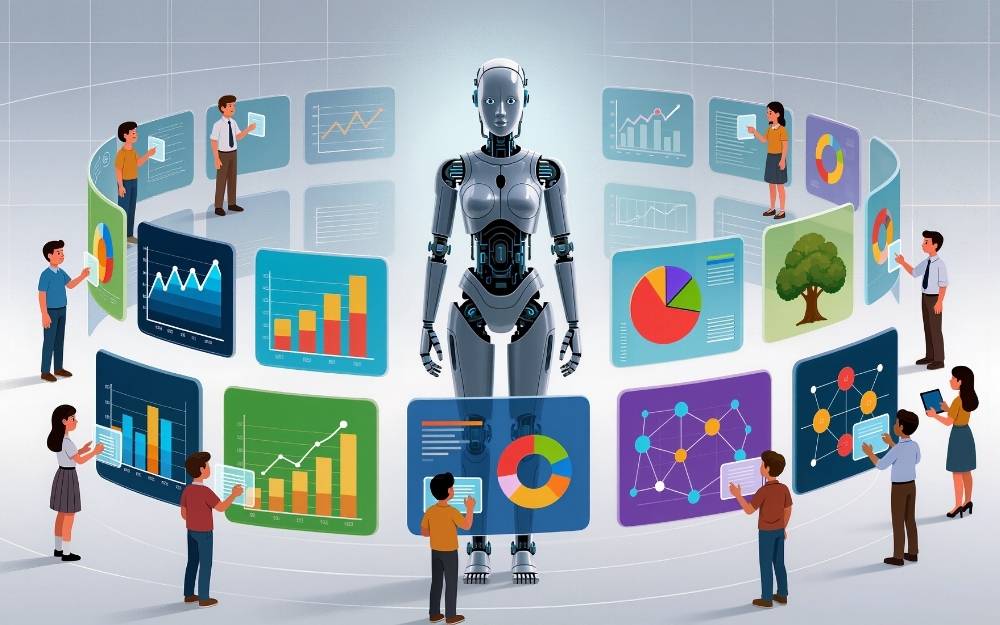
Artificial intelligence has redefined how brands grow, scale, and compete. What used to require large teams, long processes, and guess-heavy decisions is now handled by automated systems that learn, predict, and adapt faster than any human team ever could. For modern brands trying to stand out in crowded markets, AI is no longer a competitive advantage—it’s the baseline.
This guide breaks down how AI is reshaping brand growth and why forward-leaning companies can’t afford to ignore it.
1. Precision Targeting That Eliminates Waste
AI analyzes massive datasets—behavioral patterns, engagement signals, purchase intent, sentiment—to pinpoint exactly who is ready to act. Instead of broad demographic assumptions, AI creates dynamic micro-segments that evolve in real time.
The result?
Fewer wasted impressions, more meaningful interactions, and ads that reach people who actually care.
2. Automated Content That Scales Quality
AI-powered content engines help teams create messaging faster, sharper, and at scale. From email sequences to social captions to personalized product recommendations, AI tailors output to the individual user.
Brands no longer guess. They create with data behind every word.
This enables:
- Higher engagement rates
- Consistent brand voice across channels
- Faster production cycles
- Improved customer experience
3. Real-Time Performance Optimization
Instead of waiting days or weeks to interpret marketing results, AI adjusts instantly. If an audience segment cools, AI reallocates budget. If a creative underperforms, AI flags it, tests alternatives, and promotes winners automatically.
That’s not just optimization—it’s operational intelligence.
Brands using AI for campaign management report:
- Higher ROAS
- Lower CPA
- More predictable performance
- Faster scaling opportunities

4. Predictive Analytics That Guide Strategy
AI models forecast trends before they break. They reveal what users will want, where demand is heading, and how external factors (competitors, economic shifts, behavior changes) will influence performance.
This allows brands to:
- Take the right actions earlier
- Prioritize initiatives with the highest future impact
- Allocate budgets with precision
- Build growth plans that align with real data
It’s a shift from reactive to proactive brand building.
5. Enhanced Customer Relationships
AI elevates relationship-building with features such as:
- Smart chatbots that resolve issues instantly
- Behavior-based messaging that sends the right content at the right time
- Dynamic support workflows that learn from user interactions
- Personalized experience hubs that adapt to each user
Users feel understood, supported, and connected—all at scale.
6. Unified Insights for Cross-Channel Clarity
Modern brands operate across dozens of platforms. AI centralizes those signals, turning noise into clarity.
With AI-driven dashboards, teams instantly see:
- What channels drive the highest lifetime value
- Which messages resonate
- Where user journeys break
- Which actions lead to long-term loyalty
No more fragmented reporting. No more blind spots.
Final Takeaway
AI is not replacing marketers—it’s amplifying them. It removes guesswork, automates complexity, and delivers insights that power sharper decisions. Brands applying AI to their growth strategies move faster, experiment smarter, and outperform competitors stuck in old methods.
The brands leading tomorrow are the ones embracing AI today.